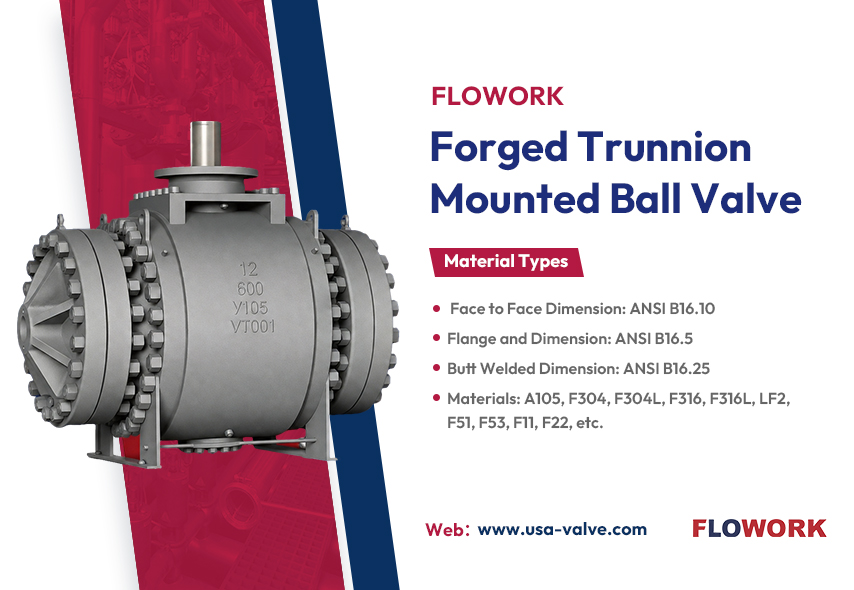
Ball Valve

Ball Valves for Various Industries

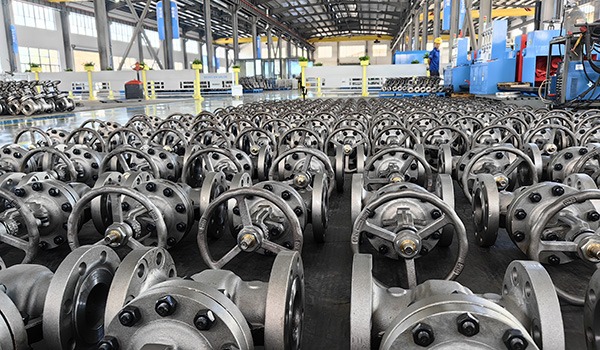
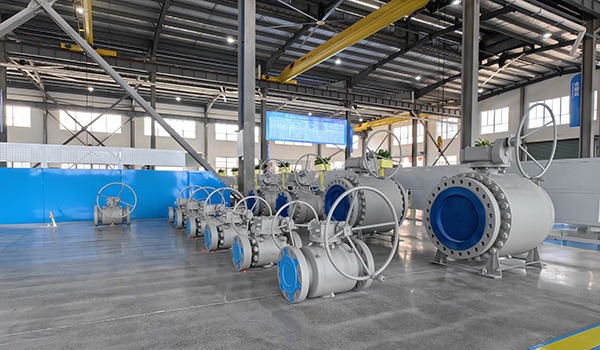
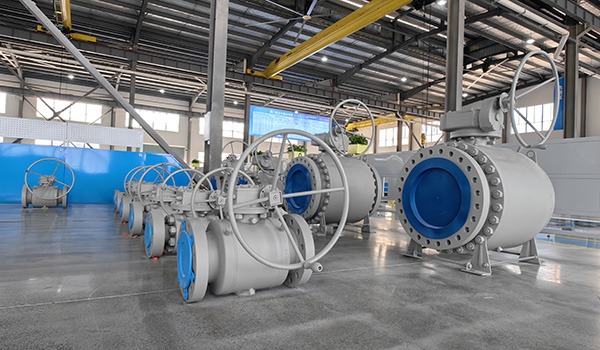
Ball Valve series adopt spherical ball internals within multi‑grade bodies. Flow toggles via simple 90‑degree rotation for manual, gear, pneumatic or electric operation. These versatile quarter‑turn valves deliver shut‑off and isolation for industrial process piping. They work for oil & gas, chemical, power and marine sites, handling slurries, corrosive fluids and cryogenic media. Choose floating‑ball for mid‑low pressure or trunnion‑mounted for large‑bore high‑pressure service, backed by full certifications and custom build options. This prevents roadblocks when sourcing valves for complex non‑standard conditions.

Send over your site conditions, we will shortlist matching valve options.

FAQ

What are the key advantages of ball valves compared to gate valves and globe valves?‌

90° rapid opening and closing, full bore with virtually no flow resistance, soft seals that ensure zero leakage, and easy operation, making them suitable for industrial pipelines requiring high flow rates and emergency shut-off.

What are the maximum nominal diameters corresponding to the 150 LB to 2500 LB pressure classes?‌

150 LB: maximum 56 inches; 300 LB: maximum 48 inches; 600 LB: maximum 42 inches; 900 LB: maximum 36 inches; 1500 LB: maximum 30 inches; 2500 LB: maximum 24 inches.

What are the core standards that American standard ball valves must comply with?‌

Design complies with ASME B16.34/API 608; flanges comply with ASME B16.5/B16.47; structural length follows ASME B16.10; and testing follows API 598/API 6FA.

Which type of ball valve should be selected for pipelines carrying slurry or pulverized coal containing particles?‌

Select a hard-seal, wear-resistant ball valve with a tungsten carbide-coated ball and seat, featuring a self-cleaning scraper mechanism to prevent particles from jamming or scratching the sealing surfaces. Its service life is 3 to 5 times longer than that of a standard ball valve.

What key inspections are performed on ball valves before shipment?‌

Spectral material verification of key components, non-destructive testing, body pressure testing at 1.5 times the rated pressure, high- and low-pressure seal testing at 1.1 times the rated pressure, and additional fire-resistant and anti-static verification for high-risk operating conditions.

How should one choose between floating-ball and fixed-ball ball valves?‌

For sizes below DN200 and pressure ratings up to PN64, select medium- and low-pressure floating-ball ball valves, which offer low cost and reliable sealing; For high-pressure, large-diameter long-distance pipelines, select fixed-ball ball valves, which offer strong resistance to deformation and feature a dual-shut-off pressure relief safety mechanism.

What type of ball valve is suitable for highly corrosive acid and alkali pipelines?‌

Select ball valves with 316L or duplex steel bodies, or PTFE-lined ball valves, paired with EPDM or PTFE corrosion-resistant seals to prevent leaks caused by the medium corroding the valve body.

How can I obtain the product’s compliance and traceability documentation?‌

Each ball valve is assigned a unique traceability number. A complete set of material certificates, test reports, and ASME/API certification documents is included with the shipment. The entire production chain data can be retrieved using this number, enabling full quality traceability.

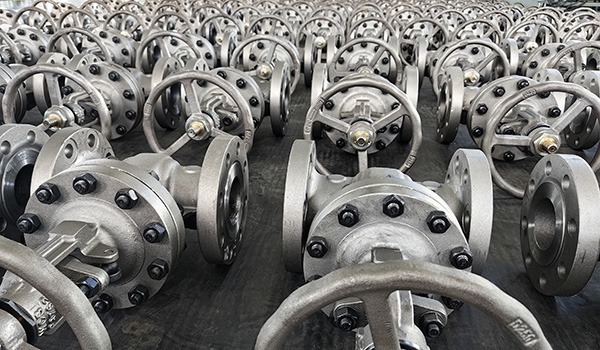
Why FLOWORK

Core Design Advantages of Ball Valves

Typical Operating Conditions Where the Design Advantages of Ball Valves Are Most Pronounced

1.High-Pressure, Large-Diameter Long-Distance Transmission Pipelines: The ball in a fixed-line ball valve is rigidly secured by upper and lower bearings, enabling it to withstand Class 2500 high pressure. Combined with dual block-and-bleed (DBB) and automatic pressure relief functions, it is the preferred choice for long-distance oil and gas transmission pipelines and high-pressure chemical pipelines, effectively mitigating safety risks caused by abnormal pressure surges in the medium.

‌2. Flammable and Explosive Environments/Scenarios Requiring Emergency Shut-off‌: The rapid opening and closing characteristics of ball valves, combined with fire-resistant and anti-static designs, enable them to quickly shut off the medium in flammable and explosive environments—such as petroleum refining and natural gas transmission—to prevent accidents from escalating. Their intrinsically safe properties far surpass those of other valve types.

‌3. Highly Corrosive and Particulate-Containing Complex Media Conditions‌: By selecting special materials such as 316L, duplex steel, and PPH, ball valves can reliably and stably transport acids, alkalis, and strongly oxidizing media over the long term; their metal hard-seal structure can also withstand abrasive media containing particles, such as pulverized coal and mineral slurry, and is less prone to seal face jamming or scratching.

4.Complex Piping Systems Requiring Media Diversion or Direction Change: Thanks to the special valve plug channel design, three-way ball valves can achieve media convergence, diversion, and flow direction switching with a single valve. This replaces complex piping systems composed of multiple standard valves, significantly reducing leakage points and improving pipeline operational efficiency.

5‌. Decentralized automation scenarios without an air supply: Electric ball valves require no additional compressed air system and operate solely on electrical power. They offer high control precision and are suitable for decentralized industrial piping systems in industries such as water treatment, food, and pharmaceuticals, and can be directly integrated into remote automation control systems.

roll forming machine manufacturer

Contact Us Now

Whats APP @ MAIL