
Introduction
If B2B buyers are purchasing valves for water treatment, chemical plants or oil and gas projects, they may find that it is not easy to choose between ball valves and gate valves; the basic work done by these two valves is the same, which is to cut off the flow and open the flow. It’s moving, but the internal design is very different. If you choose the wrong one, the valve you get in the end may be too slow to cope with emergencies; it may also leak under pressure; it may also take up too much vertical space in the machine room. Let’s talk about the real differences below to help buyers make the right choice, keep the budget and the project on track.
What is a Ball Valve?
Let’s start with the basics. Ball valve is a kind of quarter-turn valve. There is a hollow metal sphere inside the valve body, and a hole is directly drilled on the ball. When the handle is rotated 90 degrees, the hole is aligned with the pipe, and the fluid can pass through. When it turns to the vertical position, the flow is blocked.
The reason why buyers prefer this kind of valve is mainly because it moves very fast. The handle can be switched from full opening to complete closure when turning a quarter-turn. In terms of sealing, it usually uses a soft valve seat, and the material is mostly PTFE or Teflon, and the soft valve seat will be pressed tightly. Live in the sphere, forming a “bubble-tight” seal. This kind of valve is relatively compact and light. It is often a priority type in situations where rapid cutting or automatic control is required.
However, after the valve is opened, the fluid passes around from the side of the sphere, leaving a small cavity inside the valve body; this means that it is not suitable for high-viscosity fluids or applications with high hygiene requirements, because bacteria may multiply in the stranded fluid.
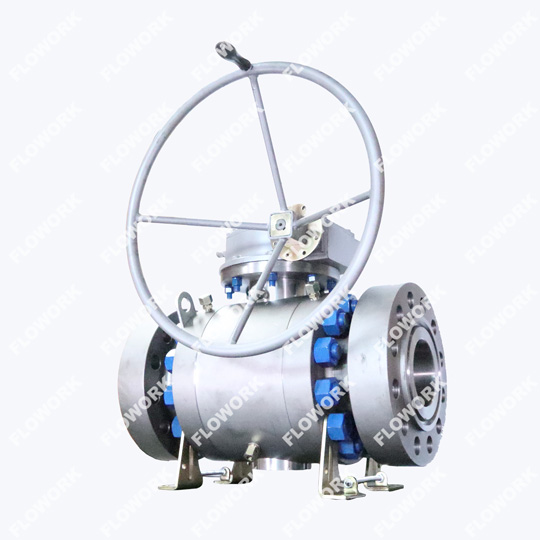
ball valve
What is a Gate Valve?
Gate valve takes another path. It relies on a flat plate or wedge-shaped valve plate, that is, “gate”, to work by moving up and down in the valve body; when turning the handwheel, the valve plate will completely rise out of the channel, and the pipeline will open.
Unlike ball valve, gate valve needs to rotate the handle several times to fully open or close; depending on the size, it often needs to turn 10, 20, or even 30. In this way, the movement is relatively slow, but after it is fully opened, the fluid channel is a straight road, unobstructed, which looks similar to an ordinary pipe.
Because the valve plate needs to be retracted back to the valve cover, that is, inside the bonnet, the gate valve is usually higher than the ball valve; this kind of valve has always been a traditional and commonly used choice for large-calibre water supply supervisors and high-temperature steam pipelines.
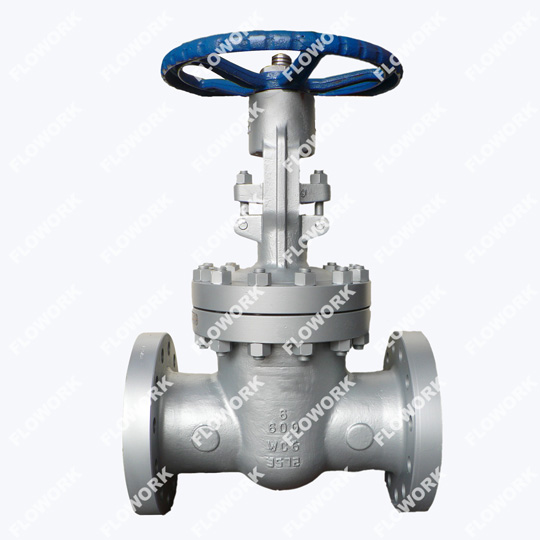
gate valve
Ball Valves vs Gate Valves: Key Differences
Put the two valves together and compare them. The following contents can be directly compared at the next procurement meeting.
Operation Speed
The Ball valve can be opened or closed as long as it is turned 90 degrees, and it can be completed in one or two seconds; if the scene needs to be cut off urgently, this is more critical. The Gate valve needs to rotate the handle several times, which may take a few minutes. If you want to do automation, such as with pneumatic or electric actuator, ball valve is easier to realise and cheaper, because it only needs a simple quarter-turn actuato.
When the Gate valve is fully opened, the valve plate will retract into the bonnet, leaving a straight and unobstructed channel, and the pressure drop is almost zero.
Full-port ball valve can also achieve close to zero resistance, because the hole of the ball is exactly the same size as the pipe; however, if you buy a reduced-port ball valve to save money, the hole diameter will be smaller than the pipe, which will cause pressure drop and turbulent. For large-calibre pipelines with high pumping energy consumption, gate valve or full-port ball valve is usually the preferred type.
Sealing Performance
Ball valve uses soft valve seats, such as PTFE. The soft valve seat presses the sphere, which can form a relatively tight two-way seal; this seal is more suitable for gas and hazardous chemical occasions.
Gate valve relies on metal-to-metal seating; this structure is relatively durable, but with metal wear and debris stuck into the track, slight micro-leakage may occur over time. If the site needs 100% tight sealing, the ball valve is usually more stable.
The following quick check list can be compared on the desk at any time:
| Feature | Ball Valve | Gate Valve |
| Operation | Quarter-turn (90°) | Multi-turn (handwheel) |
| Speed | Very Fast (Seconds) | Slow (Minutes) |
| Sealing | Tight (Bubble-tight, soft seat) | Good, but prone to micro-leaks |
| Pressure Drop | Zero (if full port) | Near Zero (straight path) |
| Size/Weight | Compact & Light | Tall, Bulky & Heavy |
| Throttling | Terrible | Terrible |
Which Valve Should You Choose?
To choose the right valve, ask yourself two questions first. How does this pipeline usually operate and what medium is conveyed in it?
When to Choose a Ball Valve
- Emergency Shutoff:emergency cut-off, is chosen because it is fast, and when chemicals leak, a few seconds are crucial.
- Frequent Operation:if the operator needs to switch once a day or even every hour, the ball valve is more handy to use.
- Automation:if the system relies on PLC and actuators to control, ball valve is easier to realise automation.
- Gas and Slurries:the sphere has a wiping effect on the valve seat, which helps to remove debris, so it is very suitable for media such as slurries.
- Space Constraints:if the space in the machine room is tight and the vertical space is limited, the ball valve can save space.
When to Choose a Gate Valve
- Main Water Lines:for occasions where maximum flow and low pressure drop are required to save pumping costs, gate valve can be considered.
- Large Diameter Pipes:in large-calibre pipes, that is, more than 12 inches, gate valve is usually more cost-effective than ball valve.
- Infrequent Operation:if the valve is completely open at once and maintained for several months, such as the supervisor isolation valve, the gate valve is completely fine.
- High-Temperature Steam:metal-seated gate valve performs much better at high temperature and high pressure than soft sealed ball valve.
Pros and Cons of Each Valve
No valve can be perfectly suitable for all working conditions. Let’s take a look at the advantages and disadvantages of both sides separately.
Ball Valve Pros:
- The switch speed is very fast, and the operation is relatively fast.
- Under dangerous media, the seal is relatively tight and reliable.
- The volume is small and the weight is light.
- It is relatively easy to do automation, and the cost is not high.
Ball Valve Cons:
- There is a small cavity inside the valve body, and the fluid may remain in it, which is not suitable for the food or pharmaceutical industry.
- Soft PTFE valve seats are prone to degradation when encountering extremely high temperatures or highly corrosive chemicals.
- Don’t use it for throttling, otherwise cavitation may occur and the valve will be easily damaged.
Gate Valve Pros:
- The flow characteristics are relatively good, the channel is straight, and there is almost no pressure drop.
- It is more suitable for high-temperature and high-pressure steam occasions.
- When the size is particularly large, it is cheaper than ball valve.
Gate Valve Cons:
- The operation is relatively slow, and it takes several laps.
- It is tall and bulky, requiring more vertical space.
- If the gate is parked in the half-open position, that is, throttling, it is easy to produce vibration, and the wear will be aggravated.
- Metal seats may have micro-leakage after a long time of use.
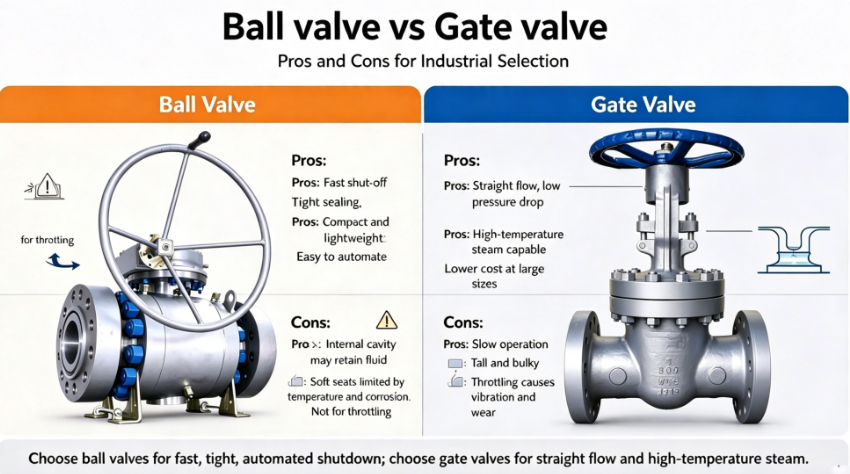
Pros and Cons of Each Valve
What Makes FLOWORK a Trusted Valve Manufacturer?
If the buyer knows which valve to buy, it can only be half successful. The other half depends on whether the supplier is reliable and can avoid sending the leaking castings to the customer to avoid on-site returns.
FLOWORK has been in the field of fluid control for many years. It is the main supplier of high-quality ball valve and gate valve, and has a deep accumulation in the oil and gas, water and petrochemical industries. In some trading companies, the source of parts is not easy to find out. FLO WORK controls the whole production process by itself, so the quality is relatively stable. When the project is tight, the delivery time is not easy for buyers to wait.
Their valves are not only good in appearance, but also designed and tested in accordance with strict international standards such as API 6D, API 600, API 598 and API 607; whether it is heavy-duty trunnion ball val Ve, standard floating ball valve, or sturdy API 600 gate valve, FLOWORK has corresponding manufacturing capacity to deliver.
What makes buyers feel at ease is in the test link. Each valve will undergo stricter pressure and leakage tests before leaving the factory, so the costly on-site returns or delays can be reduced. If the buyer encounters difficulties in matching standards, materials and specific media, temperature and pressure, FLOWORK’s engineering The team can provide guidance; they not only sell a box of products to customers, but also help design the plan together.
FAQs
Can a ball valve replace a gate valve?
In many smaller applications, or occasions that require rapid operation, sealing and tightness, it can be replaced; however, gate valve is usually more suitable for critical occasions such as large-calibre water supply supervisors and high-temperature steam.
Which valve has a lower pressure drop?
When it is fully opened, the pressure drop of the gate valve is the lowest, because the channel is straight, and the gate is completely open; the full-port ball valve follows closely, reduced-port ba Ll valve will limit the flow.
Are ball valves more expensive than gate valves?
Generally speaking, yes, the internal processing of the ball valve is more complicated, and it also requires the use of precise soft valve seats, such as PTFE. The early cost will be slightly higher, especially in the large size; however, it operates quickly and seals tightly, and the extra cost is often sayable.
Why are gate valves not used for throttling?
If the gate valve is partially closed, the gate will vibrate against the beam, and the wear of the sealing surface will be serious, and the vibration may also damage the valve stem and packing; in addition, the ball valve should not be used for throttling, so that you should use globe valve.
Conclusion
The key to choosing between ball valve and gate valve is not to judge which one is “better”, but to see whether the valve can be suitable for the specific application; ball valve operates quickly, seals tightly, compact in size, emergency cut-off and automation system It is more suitable to use; the flow channel of the gate valve is not obstructed, and it performs better on large-calibre, high-temperature, pressure drop and critical pipelines.
If the buyer is purchasing valves for the next project, FLOWORK can provide both, both ball valves that meet API standards and gate valves that meet API standards, with stricter tests and global project experience behind it.When the project needs to confirm the standards and materials, you can contact FLOWORK directly to clarify the application requirements.
