
Introduction
For B2B buyers who are purchasing check valves for water systems or industrial fluid systems, there is a large difference between different internal designs, which needs to be clarified first; the common types are mainly Swing, Lift and Dual Plate. If the type is selected incorrectly, it may bring serious Water hammer, pump damage, increased pressure drop and continuous operation problems. In key applications, inappropriate valve design will also cause loud impact sounds, turbulence and high-cost equipment failures. This article gives a detailed explanation of the key differences between these three types of check valves, and analyzes their working methods, performance, and how enterprises should choose the type suitable for their business one by one.
What Are Swing, Lift and Dual Plate Check Valves?
The check valve can be regarded as a device that automatically acts as protection. It opens when the fluid flows in the correct direction, and it closes when the flow stops or reverses, thus preventing backflow.
Swing Check Valve
The valve flap of the Swing check valve is hinged. When the fluid is pushed forward, the valve flap will swing out like the hinge on the door, making way out of the channel.
Lift Check Valve
The Lift check valve is opened by the valve disc or the piston leaving the valve seat vertically. When the fluid is pushed up, the valve disc rises. After the flow stops, gravity or spring will force it to fall back.
Dual Plate Check Valve
The Dual Plate check valve uses two semicircular valve plates with springs, which are folded and opened like a double door in a pub; as soon as the positive flow stops, the spring will bounce the valve plate back to the closed position.
Swing Check Valve
Scope and Applications
Swing check valve is more widely used in large-caliber water supply lines, sewage treatment plants and general industrial pipelines. For occasions where horizontal flow is required, the circulation capacity is as large as possible and the resistance is as small as possible, this kind of valve is more suitable, and it can often be seen in municipal water supply supervisors.
Design and Performance
The design of this valve is not complicated, and the structure is relatively strong; because the valve flap can be completely placed outside the channel, the pressure loss is very low. However, it has an obvious disadvantage, that is, it depends on gravity to close, and the valve flap needs to move a long distance to return to its position, so it closes slowly; if the fluid flows back quickly, the valve flap will close with a loud noise, resulting in a serious water hammer. It is more suitable for stable flow conditions, but it is not ideal if it needs to be cut very quickly.
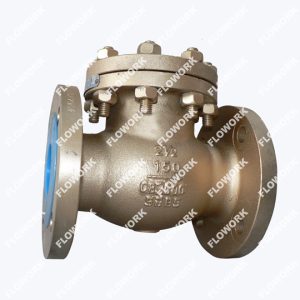
Swing Check Valve
Lift Check Valve
Scope and Applications
Lift check valves are generally small in size and are widely used in high-pressure steam, gas and boiler water supply systems. In compact pipelines that require tight sealing, such as chemical injection pipelines or power plants, such valves are often preferred.
Design and Performance
The valve travel of this valve is very short, so the closing speed is faster. Compared with the Swing valve, it performs better in preventing water hammers; however, the compact internal structure will also bring high pressure loss, and the fluid needs to pass through the narrower opening. When installing, the Lift valve should be installed on the horizontal pipeline, or the flow direction should be strictly vertical upwards, otherwise gravity will not help, and the sealing will be difficult to guarantee.
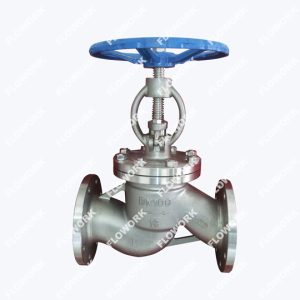
Lift Check Valve
Dual Plate Check Valve
Scope and Applications
In narrow space, HVAC systems, ship applications and pump outlet pipelines, Dual Plate check valves (usually called clamp check valves) are used more often; it can be seen in places where space is limited and weight is sensitive.
Design and Performance
This design combines the strengths of the two aspects. It is relatively light in weight and fast in action; the valve plate is assisted by spring, so it closes quickly, and the water hammer phenomenon can be almost eliminated. Usually, the clamping structure is adopted. The valve is sandwiched between two flanges, and the weight is only a small part of the swing valve. However, if the conveyed fluid contains impurities or the viscosity is high, the spring mechanism may be blocked.
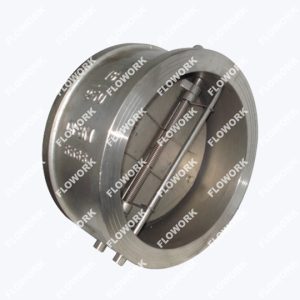
Dual Plate Check Valve
Key Differences
When comparing these three valves, it is important to pay attention to their impact on system efficiency and safety.
Pressure Drop
The pressure drop of the Swing check valve is the lowest, because its valve flap can be completely placed outside the channel; the pressure drop of the Dual Plate will be slightly higher, but the overall efficiency is still high; the pressure drop of the Lift check valve is the highest among the three due to the compact internal flow channel and limited space.
Closing Speed and Water Hammer
The Swing valve closes the slowest, so the risk of water hammer is also the highest; the Lift valve closes faster; the Dual Plate valve closes the fastest because the valve plate is assisted by spring, which is an ideal choice to prevent water hammers.
Size, Weight and Cost
Dual Plate valves are the most compact and light among the three, which can reduce transportation costs and save installation space; Swing valves are the largest and heavier.
| Feature | Swing Check Valve | Lift Check Valve | Dual Plate Check Valve |
| Flow Direction | Mostly Horizontal | Horizontal or Vertical Up | Horizontal or Vertical |
| Pressure Drop | Low | High | Low to Medium |
| Closing Speed | Slow | Fast | Very Fast (Spring-assisted) |
| Water Hammer Risk | High | Low | Very Low |
| Space & Weight | Large / Heavy | Compact / Medium | Very Compact / Light |
Which Check Valve Fits Your Business?
When choosing a check valve for the business, there are several aspects that need to be thought about first, so that the later selection will be smoother.
First of all, it depends on the purpose of the valve connection. If it is a large municipal water supply pipeline, the Swing check valve is usually given priority because it has the lowest pressure loss; if it handles high-pressure steam, the Lift valve can provide the required tight seal; for the pump outlet pipeline with tight space, D Ual Plate will be more suitable.
Secondly, it depends on whether the water hammer is a risk. The initial price of Dual Plate valves may be a little higher, but long-term use is relatively worry-free, and it can also protect expensive pumps; Swing valves are cheaper, but the equipment may be easily damaged by pressure surges.
Then it depends on how much space there is on the site. For the important system in the compact machine room, the clamp-type Dual Plate valve is more necessary, and it can save installation space.
The warranty terms of the equipment also need to be considered. Many pump manufacturers have clearly stated that the premise of the warranty is to avoid serious backflow shocks. If you use a valve that closes slowly and is easy to trigger a water hammer, the warranty of the higher-priced pump may be directly invalidated.
For B2B buyers, Dual Plate and Swing check valves are basically common choices in the fields of pump protection and water infrastructure.
What Makes FLOWORK a Trusted Check Valve Manufacturer?
FLOWORK has a deep accumulation in fluid control manufacturing. It is a major supplier of high-quality check valves and has a lot of experience in the oil and natural gas, water, electricity and shipping industries. Unlike trading companies, FLOWORK controls the production process by itself, so the quality and delivery time are relatively more stable. Some.
Their check valves are designed and tested according to relatively strict international standards, including API 594 and API 6D; whether it is the heavy Swing valve needed by the water supply supervisor or the precision Dual Plate valve for chemical plants, they have the ability to deliver.
The characteristic point is the test link. Each valve will be tested for pressure and leakage before leaving the factory, so that customers are not easy to encounter the high cost of on-site returns. If the purchaser values the traceability of materials and the relatively reliable delivery cycle, FLOWORK can be a reliable Partners to consider.
FAQs
What is the main difference between swing and lift check valves?
The valve flap of the Swing valve is swinging, the flow channel can be fully opened, and the pressure drop is relatively low, which is more suitable for large horizontal pipelines; the valve flap of the Lift valve moves vertically, closes faster, and the high-pressure sealing is also reliable. Steam and small-caliber pipelines are used more often.
Which check valve has the fastest closing speed?
The Dual Plate check valve closes the fastest, because it relies on the force of the spring. As soon as the flow stops or reverses at the beginning, the valve plate is bounced back to the closed position; therefore, this valve is more effective in preventing water hammers.
Can dual plate check valves be installed vertically?
Yes, Dual Plate is also a clamp check valve. Generally, horizontal pipelines or vertical pipelines can be installed, but when installed vertically, the flow direction must be strictly upward.
Which check valve is best for pump discharge?
It is usually more suitable to use Dual Plate check valve for the pump outlet, because it closes quickly, can prevent backflow from hitting the pump body, and can also reduce the occurrence of water hammers.
Conclusion
How to choose Swing, Lift and Dual Plate check valves ultimately depends on the application scenario. You can’t just look at a certain valve itself; Swing valves have the lowest pressure drop and can also handle large flow rates. It is more suitable for occasions such as municipal water supply. Lift valves can It is enough to cope with high pressure, but the pressure drop will be higher. The Dual Plate valve is the most compact of the three types, and it can also prevent water hammers. It will be more suitable for the pump outlet.
For B2B buyers, Dual Plate check valves can usually provide the reliability, efficiency and protection required for key pump systems; FLOWORK’s product line is relatively complete, covering from standard Swing valves to high-performance Dual Plate valves, all products Pressure tests will be done before leaving the factory. When the project needs to choose a suitable check valve, you can contact FLOWORK directly and ask them to help confirm the model.
