 Skip to content
Bronze valves, with their exceptional corrosion resistance, outstanding anti-fouling properties, and high reliability, have emerged as one of the preferred solutions for critical fluid control systems in the marine and offshore sectors.
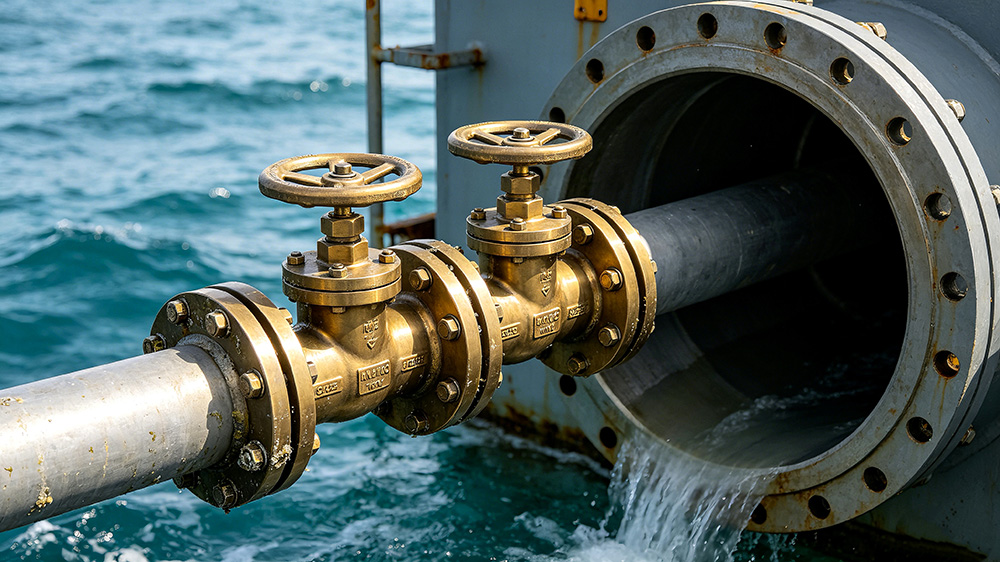
1.Solutions for Seawater Corrosion Resistance
Seawater has a high concentration of chloride ions, which can easily cause pitting corrosion, crevice corrosion, and stress corrosion cracking in ordinary metal valves. In contrast, tin bronze (such as ZCuSn10Zn2) and nickel-aluminum bronze (such as QAL10-4-4) form a dense oxide film on their surfaces that effectively blocks the intrusion of corrosive media, allowing them to maintain stable performance in seawater over the long term.
Application Scenarios: Seawater cooling systems, ballast water systems, fire suppression systems.
Advantages: The valve body and bonnet are made of cast tin bronze, while the valve stem is made of aluminum bronze, balancing strength and corrosion resistance.
Case Study: During operations in the Pacific Ocean, a merchant ship experienced sudden seawater ingress. The bronze check valve continued to operate for three years in a high-salinity, high-humidity environment without rusting, successfully preventing backflow.

2. Anti-fouling and Low-Maintenance Solutions
Copper alloys possess natural antimicrobial and anti-fouling properties that inhibit the growth of marine microorganisms, algae, and shellfish on the inner walls of valves, thereby reducing pipeline blockages and the frequency of cleaning, and lowering operational and maintenance costs.
Applicable Systems: Seawater intake points, circulating water networks, and water supply systems for offshore platforms.
Design Optimization: Features a full-bore design and smooth flow paths to further minimize the risk of deposits.
3. Highly Reliable Check Valve and Automatic Control Solutions
In ships and offshore platforms,bronze check valvesprevent seawater backflow after the pump stops, protecting the main engine, pump sets, and critical equipment.
Principle of Operation: Opens under the pressure of the flowing medium and automatically closes when flow reverses, requiring no external power.
Typical Applications: Engine cooling water systems, fuel supply systems, and emergency drainage systems.
Structural Features: Horizontal design fits compact spaces; threaded or flanged connections ensure easy installation.
4. Solutions for Extreme Operating Conditions
Certain high-performance nickel-aluminum bronze valves (such as C95800/C95500), after undergoing special treatment, can withstand extreme temperatures ranging from -196°C to 800°C, meeting the demands of high-end offshore engineering projects such as LNG receiving terminals and deep-sea oil and gas development.
Technical Advancements: Vacuum brazing and ion nitriding enhance the corrosion resistance of welds, meeting the highest standards of NACE MR0175.
Certification Assurance: Certified by ABS, DNV, BV, TÜV, API, CE, and other international bodies, these valves are widely adopted globally.
5. Life Cycle Cost Optimization Solution
Although the initial investment in bronze valves is higher than that of standard cast iron and cast steel valves, they have a service life of over 10 years and require virtually no maintenance, significantly reducing replacement frequency and downtime losses, resulting in a more favorable overall TCO (Total Cost of Ownership).


